Wednesday, 26 June 2024

Menander: The Life and Works of the Ancient Greek Comic Poet

Menander was born around 342 BC in Athens and died in 290 BC. Hailing from a family of prominent intellectuals, his father was Diopeithes, a general and governor. He received a well-rounded education that instilled in him a deep appreciation for the arts, and philosophy. At the age of 20, Menander began composing his own plays, receiving critical acclaim and audience enthusiasm for his exceptional talent.


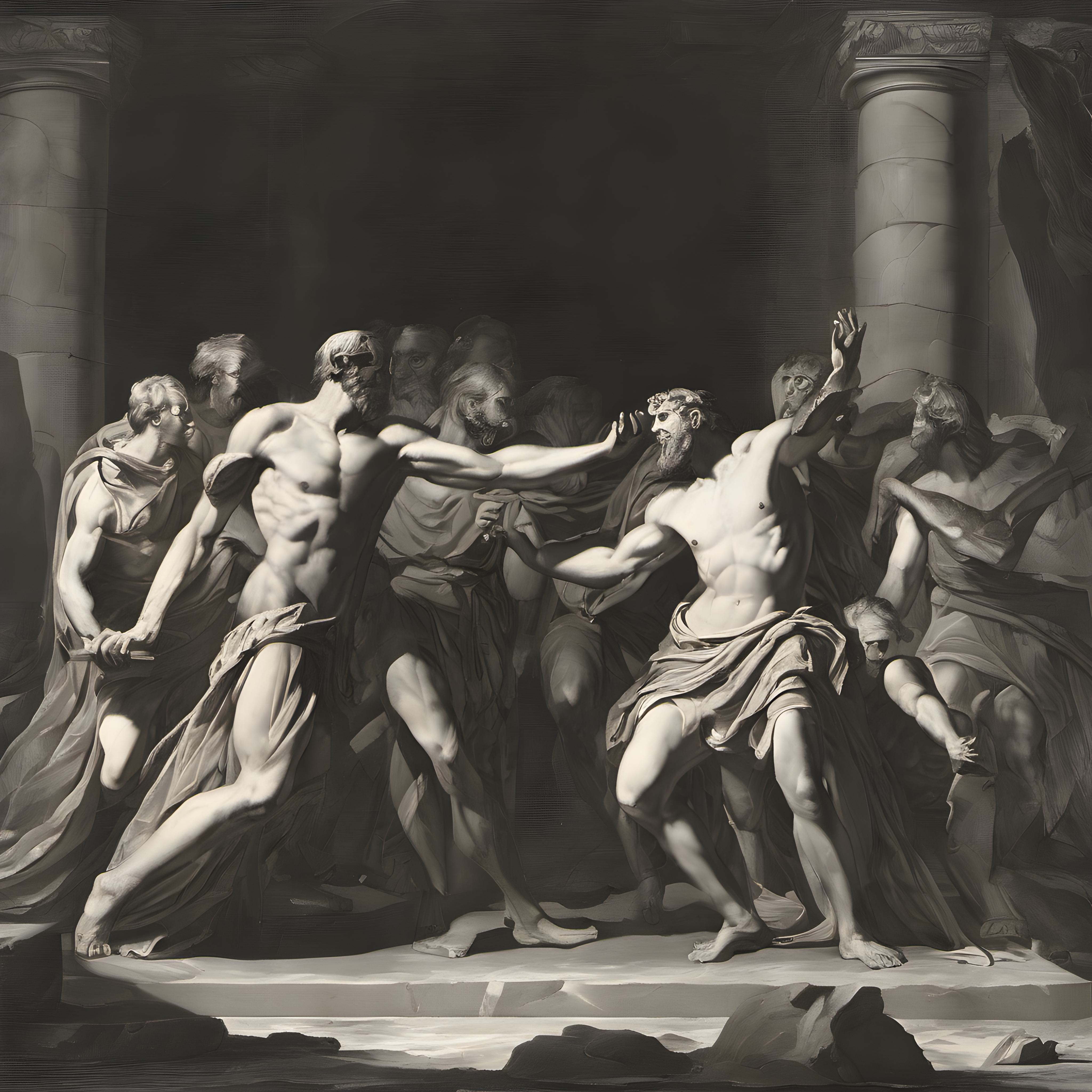
Source Image: 123RF AI Image Generator 

Life and Background

Menander's rise to prominence coincided with the final decades of the Athenian Golden Age, a period of unparalleled cultural and intellectual flourishing. During this time, he established himself as a leading figure in the New Comedy movement, a theatrical form that shifted the focus from the grand, mythological narratives of the past to more intimate, character-driven stories that reflected the everyday lives and social dynamics of the Athenian populace. He wrote more than 100 comedies, but unfortunately only one has survived in total, and a few others have survived as verses. He won at the Lenaian Festivals eight times.

Menander's Contribution to Greek Comedy

Menander was a master of the New Comedy genre. Unlike the boisterous, slapstick humour of the earlier comedies of Aristophanes, Menander's plays were characterised by a more subtle and nuanced brand of humour, one that delved into the complexities of human relationships, social norms, and moral dilemmas. His plays often revolve around the lives of ordinary people, exploring themes such as love, family dynamics, social class, and the complexities of Athenian society.

Famous Works of Menander

Only a small portion of Menander's original works have endured the test of time, some of the most renowned and influential plays are as follows:

1) Dyskolos (The Misanthrope): Considered one of Menander's masterpieces. First presented at the Lenaian Festivals, it won the first prize. For a long time, it was lost, but it was discovered in Egypt in 1952, written in papyrus.

2) Epitrepontes (The Arbitration): Although not entirely preserved, most of this particular comic play has been found written on papyrus. 

3) Samia (The Woman from Samos): This play has survived under two different titles. The first, Samia, and the second, Kideia (the Sympetherio). The story centres on the complications that arise when a young man's secret mistress becomes pregnant, leading to a series of misunderstandings.

4) Perikeiromene ( The Girl with the Shorn Hair): This play delves into the themes of love, and deception, as a young woman's life is upended by a series of unexpected events. 

Relevant Articles


References

Menander | Ancient Greek Comedian & Playwright. (1998, July 20). Encyclopedia Britannica. https://www.britannica.com/biography/Menander-Greek-dramatist

Menander. (2024, May 31). Wikipedia. https://en.wikipedia.org/wiki/Menander


Wednesday, 19 June 2024

Unveiling the Timeless Epic: Exploring the Iliad of Homer's Historical Background, Themes, and Terminology

The Iliad is an ancient epic poem attributed to the legendary poet Homer. As one of the most influential works in Western literature, the Iliad's enduring legacy continues to fascinate scholars, students, and literary enthusiasts alike. Traditionally, it is believed that it was composed in the 8th century BC and was based on older oral traditions and stories about the Trojan War and the heroes who took part in it. It is called from the city of Ilion (Troy), around which it developed. 


Source Image: 123RF AI Image Generator

Historical Background of the Iliad

The Trojan War, the central event depicted in the Iliad, is believed to have taken place sometime in the 13th to 11th centuries BC. While the exact details of the war are shrouded in mystery, scholars have pieced together a plausible narrative based on archaeological evidence and ancient sources. There are many theories regarding the event. There may have been more than one Trojan War. Troy's geostrategic location near the outlet of Hellespont warrants such a possibility. The Iliad claims the Trojan prince Paris abducted Helen, the wife of the Spartan king Menelaus, sparking the war. This event led to a coalition of Greek city-states, led by Agamemnon, launching a massive military expedition to reclaim Helen and punish Troy. The poem focuses on the final stages of the war, chronicling battles, strategies, and personal struggles of the key figures involved. The poet explores themes of honour, glory, and the devastating consequences of war.

Since ancient times, many Greeks, despite their beliefs that the war was a real event, continued to doubt Homer's account. Thucydides, for example, doubted the numbers given by Homer for the number of ships. Euripides, in his work ''Helen,'' describes that the real Helen was not in Troy but in Egypt, and that in Troy was just her phantom, wanting to use it to show the lies that the wars are based on.

Themes in the Iliad

1) The Futility of War: The Iliad presents a sobering view of the devastating impact of war, with its description of violence, loss and the human toll. Despite the heroic exploits of the warriors, the poem ultimately underscores the futility and tragedy of armed conflict.

2) The Tension Between Individuals and Collective Interests: The Iliad delves into the complex relationship between the individual and the collective, as the characters struggle to balance their personal desires and ambitions with the demands of their respective communities and the greater good.

3) The Role of the Gods: The Iliad features a prominent role for the gods of the Greek pantheon, who actively intervene in the affairs of mortals, shaping the course of the war and the lives of the characters. The interplay between the divine and the human realms adds additional layers of complexity and drama to the narrative. This alternation between the world of the gods and the world of men in the play, has led many scholars to believe that the Iliad's author, Homer, presents an early theory about the world of ideas or world of forms, like Plato's theory.

4) The Heroic Code: The Iliad presents a nuanced exploration of the heroic code, which emphasises values such as honour, glory, and bravery in the face of adversity. However, as characters confront the moral dilemmas and personal sacrifices inherent in upholding these ideas, the poem also explores the limitation and consequences of this code. 

5) The Human Condition: At its core, the Iliad is a profound exploration of the human condition, delving into themes of mortality, grief, love, and the universal struggles that transcend time and culture.

Major Characters in the Iliad

The Poem's characters are heroes from noble families and people of divine origins, like demigods. Apart from the gods, such as Zeus, Hera, Athena, Apollo, and others, who intervene in the flow of events, the main characters are the mortals.

1) Achilles: The legendary warrior and central figure, son of a mortal king, Peleus, and a goddess, Thetis. Neoptolemus is mentioned as his son. Neoptolemus plays a central role in some ancient Greek tragedies, one of which is Philoctetes

2) Hector: Son of Priam and Hecuba. He is the Trojan prince and military commander, Hector is a noble and tragic figure who is torn between his love for his family and his duty to defend his city against the Greek onslaught. 

3) Odysseus: The cunning and resourceful Greek leader. In contrast to Odyssey, where he plays a central role, his role in the Iliad is not as significant, with the exception of a few instances where numerous leaders appear to honour him. Agamemnon describes him as his best and most honoured friend among the Greeks. 

4) Agamemnon: The powerful king of Mycenae and commander-in-chief of the Greek forces. All the Greek leaders praise and honour him. Achilles' disobedience, to follow his order and give him Briseis, has been characterised as hubris on the part of Achilles, who did not respect Agamemnon's authority. Apart from the Iliad, Agamemnon remains a central figure in some ancient Greek tragedies, such as the first part of the Oresteia, Agamemnon. In this play, Aeschylus calls hims the king of men. 

5) Menelaus: Agamemnon's brother and the husband of Helen. 

6) Idomeneus: He was the king of Crete and a prominent leader in the Greek army. He was known for his bravery and skill in battle. 

Common Misconceptions About the Iliad

There are various misconceptions among readers about the Iliad that are understood only after one reads the entire poem.

The End of the Iliad: The end of the Iliad differs from the opinion held by most people who have not read the specific work. The poem does not actually include many incidents that the public is aware of. The real end of the book comes with Hector burial. For this reason, important events such as the fall of Troy using a wooden horse, the death of Achilles from an arrow in his heel, the death of Ajax, and other incidents are not mentioned in the book. The Trojan horse, for example, is mentioned in Odyssey. The death of Achilles is not described in Iliad, and Odyssey mentioned his funeral. In the Iliad, it is only written that the divine punishment for Achilles would come from Apollo and Paris. The death of Ajax is mentioned in Odyssey, but there is no mention of suicide as the cause of death, with the way the ancient Greek tragedy ''Ajax'' of Sophocles informs us.

One of the manuscripts of the Iliad contains a remark by an annotator to the effect that certain authorities substituted for the last line the words: Such were the funeral rites of Hector. And now there came an Amazon...'' This suggests that the line was used by poets following Homer as a link for the continuation of the story after the burning of Hector's body. We know for sure that such continuations were made and that the next episode was the arrival at Troy of the Amazon Queen, Penthesilea, who comes to Priam's help, fights Achilles, and is killed by him. The story was told by Quintus of Smyrna, who lived in the 4th century after Christ and wrote a Greek epic in the Homeric manner under the title Where Homer Ends.

Relevant Articles


References

Iliad | Description & Facts. (1998, July 20). Encyclopedia Britannica. https://www.britannica.com/topic/Iliad-epic-poem-by-Homer

Wednesday, 12 June 2024

Aeschylus and His Plays

Aeschylus was born in Eleusis in 524 BC. He is an ancient Greek tragedian with a particularly important contribution to the development of ancient theatre. It is also noteworthy that he participated in the Persian wars, particularly in the naval battle of Salamis, which himself considered one of his greatest achievements. He is known to have written around 80-90 plays, but only seven of his works have survived to the present day.


Source Image: 123RF AI Image Generator

The Persians

The Persians, based on the Persian Wars, is the oldest surviving ancient Greek drama. It portrays the Persian perspective of the battle of Salamis and the aftermath of their defeat.


Source Image: 123RF AI Image Generator


Seven Against Thebes

Seven Against Thebes is about the conflict between Oedipus' sons, Eteocles and Polynices, who fight for control of the city of Thebes.


Source Image: 123RF AI Image Generator

The Suppliants

The Suppliants is a play about the daughters of Danaus, who flee Egypt to escape forced marriage to their cousins, the sons of Aegyptus.


Source Image: 123RF Image Generator

The Oresteia

The Oresteia is a trilogy that follows the house of Atreus and the curse that plagues the family. It includes the murder of Agamemnon by his wife Clytemnestra, the revenge of their son Orestes, and the resolution of the curse.


Source Image: 123RF Image Generator

Prometheus Bound

This play is attributed to Aeschylus. However, some scholars debate whether Aeschylus was the actual author. Prometheus Bound is the first or second part of a trilogy called ''Prometheia,'' of which the other two parts, ''Prometheus Unbound'' and ''Prometheus the Fire-Bearer,'' are now lost. The play tells the story of the titan Prometheus, who defies the gods by giving fire to humanity and teaching them various arts and skills. As punishment, Zeus orders Prometheus to be bound to a rock.


Source Image: 123RF AI Image Generator

These were the seven surviving works of Aeschylus, each contributing to the rich tapestry of ancient Greek Tragedy.

Relevant Articles


References

Taplin, O., & Podlecki, A. J. (2024b, April 23). Aeschylus | Biography, Plays, & Facts. Encyclopedia Britannica. https://www.britannica.com/biography/Aeschylus-Greek-dramatist

Wednesday, 5 June 2024

The Suppliants by Aeschylus: Unveiling Ancient Greek Tragedy and Its Enduring Themes

''The Suppliants'' is one of Aeschylus' earliest surviving plays; we do not know exactly the specific year it was first performed, but it was before Oresteia that it premiered in 458 BC. This work should not be confused with the work of Euripides, who in 423 BC wrote a play with the same title but with a different central theme and plot.


Overview of ''The Suppliants'' by Aeschylus

''The Suppliants'' tells the story of the Danaids, the fifty daughters of Danaus, who flee their homeland in Egypt to escape being forced into marriage with their cousins, the fifty sons of Aegyptus. Seeking refuge in Argos, the Danaids appeal to the Argive king, Pelasgus, for protection and asylum. The play explores the tension between the Danaids' desire for freedom and the political and social consequences of their actions, as well as the complex relationship between humanity and the divine. On the other hand, King Pelasgus comes in front of a hard decision, giving the daughters to King Aegyptus, he keeps his people safe but causes the wrath of Zeus, who, for the ancient Greeks, was the protector of the suppliants. 

The play is the first part of a trilogy, with the second part called the Egyptians and the third part the Danaids, but it is the only part that survives in its entirety.

Themes and Messages in ''The Suppliants''

The play delves into the desperate quest for freedom and autonomy, symbolising the desire for self-determination and the right to choose one's own path. Central to the narrative is the concept of hospitality, emphasising the moral obligation and cultural norms governing the treatments of suppliants and refugees in ancient Greek society. Zeus was the god of Hospitality; for that reason, he was called Xenios Zeus. From the Greek word Philoxenia, which means hospitality. Furthermore, the play addresses the qualities of a democratic leader, portraying the ideal traits of a ruler who values democratic consultation and the welfare of people. 

Characters

  • Chorus of the fifty daughters of Danaus.
  • Danaus, a descentant of Zeus and Io.
  • Pelasgus, King of Argos.
  • Herald of the Egyptians.
  • Second chorus of maids attending the Danaids.
  • Other soldiers and Attendants.
The Myth Behind the Story

With this work, or more specifically, with the myth on which this work is based, the ancient Greeks tried to explain the origin of the people of Egypt and the religious practices they followed. The myth begins with the beautiful Io, who was the daughter of the king of Argos, Iasos, and the high priestess of the temple of Hera in Argos. When one day Zeus, the king of the gods, saw her and fell in love with her, this provoked the jealousy of Hera, who pursued Io, and she, to escape, wandered to distant places. This story is very well captured in another work by Aeschylus, Prometheus Bound, where Io recounts her plight to the captive Prometheus. 

Io, having transformed into a cow, wandered in several different places, ending up in Memphis, Egypt. She then regained her human form and gave birth to a son, Epaphus. His distant descendants were Aegyptus and Danaus. Egypt took its name from Aegyptus, according to folk etymology, thus, for Euripides, in his tragedy Helen, Aegyptus has become Egypt itself: ''Proteus, while he lived, was king here, ruling the whole of Aegyptus from his palace on the island of Pharos.''

On the other hand, from Danaus came on the tribes of the Greeks, the Danaans. Homer's epics and an ancient Egyptian tablet with hieroglyphic writing from the temple of Ammon in Thebes both mentioned this tribe.

Conclusion

The play's exploration of gender dynamics, the role of the divine, and the moral obligations of hospitality and asylum continue to resonate with audiences across ages. As we engage with ''The Suppliants,'' we gain a deeper understanding of the rich tapestry of ancient Greek drama, mythology, and history. By examining this work within the broader of Aeschylus's dramatic oeuvre and its influence on later playwrights, we uncover the profound and multifaceted nature of ancient Greek tragedy.

Relevant Articles


References

The Suppliants (Aeschylus). (2023, June 30). Wikipedia. https://en.wikipedia.org/wiki/The_Suppliants_(Aeschylus)
Suppliants | Greek tragedy, chorus, gods. (2011, October 12). Encyclopedia Britannica. https://www.britannica.com/topic/Suppliants-play-by-Aeschylus

YouTube

MoAn Inc. (2023, October 24). A Detailed Summary of THE SUPPLIANTS by Aeschylus [Video]. YouTube. https://www.youtube.com/watch?v=_34Gj_L1ycw

Sunday, 2 June 2024

Ancient Stories: The Greek Theatre


Historical Overview

The e-book ''Ancient Stories: The Greek Theatre''  offers a comprehensive exploration of the ancient Greek theatre, delving into its historical significance and enduring impact. The e-book provides readers with a detailed historical overview of ancient Greek theatre, shedding light on its origins, evolution, and cultural importance. 

Themes and Motifs

Furthermore, the e-book delves into the rich themes and motifs prevalent in ancient Greek tragedy and Comedy, offering insights into the profound societal, ethical, and philosophical issues depicted in the plays. It elucidates the enduring relevance of these themes and their impact on Western literature and drama. 

Ancient Tragedy and Comedy

The second part of the e-book is dedicated to ancient tragedy and comedy, featuring biographies of renowned playwrights such as Aeschylus, Sophocles, and Euripides. It provides a summary of their notable plays, emphasising the timeless significance of their works and their contribution to the literary and dramatic landscape.

Archaeological Sites

In the final section, the e-book takes readers on a captivating journey through the archaeological sites of the ancient theatres that have survived to this day. It offers a vivid portrayal of these ancient sites, allowing readers to immerse themselves in the historical and cultural remnants of ancient Greek theatres.

For a more in-depth exploration of the ancient theatre and its profound impact on literature and culture, ''Ancient Stories: The Greek Theatre'' is available as an e-book on Google, Kobo, and Amazon US/UK.

Series


Ancient Stories: The Mythology Behind the Sky

Wednesday, 29 May 2024

"Philoctetes": Exploring the Themes, Characters, and Motifs in Sophocles' Ancient Greek Tragedy

''Philoctetes'' is an ancient Greek tragedy written by Sophocles. It was first performed at the Great Dionysia in 409 BC, where it won the first prize. The plot centres around the character of Philoctetes, a skilled and famous archer who was abandoned on the island of Lemnos by the Greek army due to a foul-smelling wound that has become infected. One of the people who betrayed him, leaving him on the island, was Odysseus. Years later, and after receiving a prophecy, the Greeks realise that they need Philoctetes and his powerful bow and arrows to defeat the Trojans. Odysseus and Neoptolemus, the son of Achilles, arrive on the island to convince Philoctetes to join their cause. According to mythology, Philoctetes' weapons belonged to Heracles, and he gave them to him before he died. 


Source Image: 123RF AI Image Generator

Historical and Cultural Context of the Play

Understanding the historical and cultural context of ''Philoctetes'' is essential to fully appreciating its richness. Sophocles wrote this play during the Peloponnesian War between Athens and Sparta. The play's setting, the remote and desolate island of Lemnos, reflects the uncertainty of the times as the Greek forces grapple with the challenges of war and the moral and the moral dilemmas that arise. The play's exploration of themes such exile, suffering, and the role of the individuals within the larger societal and political landscape. 

The Role of Isolation and Suffering

The play delves deep into the psychological and emotional toll of Philoctetes' isolation as he has the feelings of betrayal, resentment, and a desperate longing for connection and understanding. Characteristically, there is a moment when Philoctetes describes his feelings to Neoptolemus, describing the people he met in the last years, without helping him. Sophocles portrays the ways in which suffering can shape someone's worldview, eroding their sense of trust and challenging their fundamental beliefs about justice and morality. Through his journey, the play invites the audience to consider the universal human experiences of pain, and the search for meaning in the face of adversity.

The Significance of the Bow and Arrows

The bow and arrows of the mythical hero play a crucial role in the storyline because only if the Greeks have them by their sides will they force Troy to fall. At the same time, they are serving as a metaphor for power, agency, and the ability to shape one's own destiny. The bow represents Philoctetes' skills, but also his connection to the divine, as a gift by Heracles. The struggle for control over these powerful weapons becomes a central focus of the play as Odysseus attempts to convince the main character to relinquish for the sake of the war effort. 

Moral and Ethical Dilemmas Presented in the Tragedy

The play presents a complex and thought-provoking examination of the tension between pragmatism and ethical considerations. The central dilemma emerges as Neoptolemus must decide whether to manipulate and coerce Philoctetes or to respect his autonomy and personal desires. This conflict highlights the ethical implications of using deception and exploitation to achieve a perceived greater good. 

Conclusion

In conclusion, it becomes clear that this ancient Greek tragedy continues to resonate with audiences and scholars alike, transcending the boundaries of time and culture. Philoctetes' journey, marked by his unwavering commitment to his principles and his struggle for autonomy, serves as a powerful metaphor for the human experience. His story invites us to reflect on the universal challenges we face in navigating the complexities of our own lives, the ethical dilemmas we must confront, and the resilience required to overcome even the most daunting obstacles.

Through the lens of the play, we are reminded of the enduring power of great literature to illuminate the human condition, to challenge our assumptions, and to inspire us to grapple with the most fundamental questions of our existence. As we carry this ancient tragedy with us into the modern era, we can find solace, wisdom, and a renewed appreciation for the timeless relevance of Sophocles' storytelling.


Relevant articles


References

Philoctetes | Trojan War, Greek Tragedy, Chorus. (2011, December 7). Encyclopedia Britannica. https://www.britannica.com/topic/Philoctetes-play-by-Sophocles
Philoctetes (Sophocles play). (2024, March 26). Wikipedia. https://en.wikipedia.org/wiki/Philoctetes_(Sophocles_play)
Sophocles. (1953b). Electra and Other Plays. Penguin.

YouTube

VIS MYTH. (2023, October 16). Philoctetes: The Mighty Archer of Troy | Greek Mythology Story|VISMYTH [Video]. YouTube. https://www.youtube.com/watch?v=U83fDoufl4g

Wednesday, 22 May 2024

Unveiling the Enigmatic Appeal: Exploring Beloved Villain Characters in Movies and TV Shows

When it comes to movies and TV shows, there is often a character that captivates audiences with their enigmatic appeal-the beloved villain. These characters, although antagonists, have a certain charm and allure that make them unforgettable. From their diabolical plans to their charismatic personalities, beloved villains have become an essential part of storytelling in popular culture. In this article, I will delve into the psychology behind the appeal of villain characters., explore some iconic villains in movies and TV shows, discuss the evolution of these characters in pop culture, and examine their impact on audience engagement.


Source Image: 123RF AI Image Generator

The Psychology Behind the Appeal of Villain Characters

One might wonder why audiences are drawn to villainous characters despite their nefarious actions. The answer lies in the psychology of human nature. Beloved villains often possess traits that are both enticing and relatable. They represent the darker side of humanity that we may suppress in ourselves, allowing us to explore these forbidden desires vicariously through the characters on screen. This resonates with Plato's and Aristotle's theories of mimesis. Additionally, their complexity and depth make them fascinating to analyze. The internal conflicts and motivations of these characters provide a psychological puzzle for viewers to unravel, keeping them engaged and invested in the story. 

Iconic Villain Characters in Movies

Throughout cinematic history, there have been numerous iconic villains characters that have left an indelible mark on audiences. One such example is Hannibal Lecter from ''The Silence of the Lambs.'' Played by Anthony Hopkins, Lecter is a brilliant psychiatrist and cannibalistic serial killer. His intelligence, charm, and chilling demeanour make him a captivating villain. Another iconic movie villain is Darth Vader from the ''Star Wars'' franchise. Clad in black armour and voiced by James Earl Jones, Vader is a powerful Sith Lord with a tragic backstory. His imposing presence and breathing sound have made him a cultural phenomenon.

Moving on to superhero movies, The Joker, played by Heath Ledger in ''The Dark Night,'' is often hailed as one of the greatest villain performances of all time. Ledger's portrayal of the joker as an agent of chaos is both mesmerising and terrifying. In the realm of fantasy, Lord Voldemort from the ''Harry Potter'' series is a villain who strikes fear into the hearts of both characters and readers alike. His quest for immortality and his sinister presence make him an unforgettable antagonist.

Memorable Villain Characters in TV Shows

Television shows also gave us some unforgettable villain characters. One such example is Walter White from ''Braking Bad.'' As the series progresses, we witness the transformation of Walter from a mild-mannered chemistry teacher to a ruthless drug lord. His descent into darkness and the moral ambiguity of his actions make him a complex and compelling character.

Another TV show villain is Savitar from ''The Flash.'' Savitar's character is compelling because of his complexity and depth. Despite being a villain, his backstory and motivations are explored, making him more than a one-dimensional antagonist. Understanding his connection to the hero and the emotional impact of this revelation creates a sense of empathy. Learning about Savitar's origins and the events that led to his transformation humanises the villain in the eyes of the audience.

We cannot overlook the enigmatic and mischievous Loki from the ''Marvel Cinematic Universe.'' Tom Hiddleston's portrayal of Loki has garnered a massive fan following. His complex relationship with his brother Thor, his sharp wit, and his constant quest for power make him a fan favorite. 

The Evolution of Villain Characters in Pop Culture

Early cinema often depicted villains as one-dimensional, purely evil characters. However, as storytelling techniques advanced, so did the complexity of these characters. The portrayal of villains as multi-dimensional entities with their own backstories, their own motivations, and their own vulnerabilities began. This shift allowed audiences to empathise with these characters on a deeper level, blurring the lines between hero and villain.

With the rise of antiheroes in recent years, the traditional distinction between hero and villain has become even more blurred. Characters like Walter White, who start off as protagonists but gradually embrace their darker sides, have become favorites. This evolution in storytelling has allowed for a more nuanced exploration of the human psyche, challenging the traditional notions of good and evil.

The Role of Storytelling in Creating Compelling Villain Characters

The narrative arc of a story relies on the conflict between the hero and the villain. A well-written villain with clear motivations and a compelling backstory can elevate the overall quality of the story. By understanding the villain's perspective and witnessing their journey, audiences are able to engage with the story on a deeper level. The best villains are those who challenge the hero and force them to confront their own weaknesses and flaws, leading to personal growth and transformation.

Additionally, the portrayal of a villain's charisma and charm can make them all the more captivating. When a villain is able to manipulate and deceive others through their words and actions, it adds an extra layer of intrigue to their character. This charm can also serve as a tool for the audience to question their own moral compass and explore the duality of human nature.

Fan Theories and Interpretations of Beloved Villain Characters

Beloved villain characters often inspire fan theories and interpretations, further adding to their appeal. Fans are known for dissecting every detail of a story and speculating on the true motivations and meaning behind a character's actions. This active engagement with the material keeps the fandom alive long after the movie or TV show has ended. Fan theories can range from plausible to outlandish, but they all contribute to the ongoing conversation and fascination with beloved villains.

The Impact of Beloved Villain Characters on Audience Engagement

They often become the driving force behind discussions, debates, and even cosplays. The complexity and unpredictability of these characters captivate fans, fostering a deeper investment in the story. The presence of a compelling villain elevates a movie or TV show from being merely entertaining to being thought-provoking and emotionally resonant.

Furthermore, beloved villains are empowered to inspire admiration and even empathy from the audience. This emotional connection allows viewers to develop a personal connection with the characters, making their triumphs and downfalls all the more impactful. When a villain's actions elicit strong emotional responses, it is a testament to the power of well-crafted storytelling and character development.

Conclusion

In conclusion, beloved villain characters in movies and TV shows hold an enigmatic appeal that continues to captivate audiences. Their complex personalities, relatable traits, and intriguing backstories make them unforgettable. As storytelling techniques evolve, so does the portrayal of these characters. The enduring fascination with beloved villains stems from our innate curiosity about the darker aspects of human nature and our desire to explore the forbidden. With these in mind, you can now write a compelling story.

Relevant Articles
Ancient Greek Tragedy's Plays: Antigone, Electra, Oresteia, Oedipus Rex, Oedipus at Colonus.

Themes of Ancient Greek Theatre: Mimesis, Furies, Chorus, Dramatic Irony, Catharsis


References

Wednesday, 15 May 2024

The Art of "Show, Don't Tell": Bringing Stories to Life

In the realm of storytelling, the age-old adage ''show, don't tell'' serves as a guiding principle for authors seeking to create vivid, immersive narratives that captivate readers. This fundamental concept challenges writers to craft scenes and characters in a way that allows the audience to experience the story through sensory details and active engagement rather than more exposition. 

Source Image: 123RF AI Image Generator

The Power of Vivid Description

Imagine a scene where a character is experiencing fear. Instead of stating outright, ''She was afraid,'' the narrative comes alive through vivid description. ''Her heart raced like a wild stallion, and every creak of the old house sent shivers down her spine.'' Instead of writing ''He is angry,'' depict his anger through his tone of the voice and actions, such as the harshness in his voice and the clenching of his fists. The writing evokes a palpable sense of unease, allowing the reader to feel the characters's fear and anger firsthand.

Dialogues and Actions of Characters

Characters are the lifeblood of any narrative, and ''showing'' rather than ''telling'' allows them to resonate with the readers. Instead of simply declaring, ''She was compassionate,'' the narrative could demonstrate her compassion through their selfless actions, such as comforting a grieving friend or rescuing and injured animal. Smart dialogue is essential in storytelling as it reveals characters's personalities, advances the plot, and creates realism. It allows writers to show emotions, establish relationships, and build tension, making the narrative more engaging and relatable to the audience. These approaches endear the characters to the reader through tangible demonstration of their natures.

Engaging the Senses

Incorporating sensory details enriches the narrative and immerses the reader in the story world. Rather than flatly stating, '' It was a hot day,'' the narrative could vividly depict the sweltering heat: ''The relentless sun beat down, the air wavered with heat, and the parched earth crackled beneath each footfall.'' This approach enables the reader to feel the oppressive heat alongside the characters.

Active Voice

Active voice is a grammatical structure in which the subject of the sentence performs the action denoted by the verb. For example, ''The chef prepared the meal.'' In contrast, passive voice is a construction in which the subject undergoes the action of the verb. For instance, ''The meal was prepared by the chef.'' In storytelling, an active voice is crucial for maintaining clarity and engaging the audience. It emphasises character agency, propels the narrative forward, and creates vivid imagery, all of which are essential for compelling storytelling. By portraying characters as active participants in the events, active voice draws readers into the story and ensures that the narrative unfolds with energy and immediacy. 

Avoid the ''be'' verbs

The verbs, such as ''is,'' ''was,'' and ''be,'' are known as ''be'' verbs or ''linking'' verbs. They are used to connect the subject of a sentence to a word or phrase that renames or describes the subject. In storytelling, these verbs are often advised to be avoided because they can create a passive or static tone, potentially diluting the immediacy and impact of the narrative. By minimising the use of ''be'' verbs, writers can often achieve more dynamic and engaging storytelling, as it encourages a more active and direct style of writing. 

Conclusion

In the art of storytelling, ''show, do not tell'' serves as a powerful tool for breathing life into narratives, characters, and settings. By employing vivid descriptions, evoking emotions through actions, bringing characters to life, and engaging the senses, authors can transport readers into the heart of their stories. Embracing this principle fosters a deeper connection between the narrative and its audience, resulting in a more immersive and memorable reading experience.

If you find this article insightful, please consider sharing it on your social media by clicking the social media icons below. Thank you for any support!!!


References

Wednesday, 8 May 2024

Exploring Hesiod's Theogony and the Birth of the Universe

Hesiod, the ancient Greek poet, penned Theogony, a masterpiece of mythological literature that sheds light on the universe's creation and the birth of the gods. As one of the oldest surviving works of Greek literature, it holds immense significance in understanding the roots of Greek mythology. In this article, I will explain the Theogony, unravelling its mysteries and exploring the tales of creation.


Source Image: Photosonic of Writersonic


The Creation of the Universe According to Hesiod

According to Hesiod's Theogony, the universe began with chaos, a void of darkness and formlessness. From chaos, the first primordial deities emerged, including Gaia (Earth), Tartarus (Underworld), and Eros (Love). These deities were the foundation upon which the cosmos was built.

Intriguingly, Hesiod describes the birth of the universe as a gradual process, with each deity giving birth to the next generation of gods. Gaia, for instance, gives birth to Uranus (Heaven), who becomes her consort, and together they bring forth the Titans, Cyclops, and Hecatocheires. This intricate genealogy illustrates the interconnectedness of the divine beings and their roles in shaping the cosmos.

The Birth of the Gods

The Theogony presents a rich tapestry of divine births and power struggles. After the Titans, the Olympian gods, led by Zeus, came into existence. Zeus overthrows his father, Cronus, and the Titans, establishing his reign as the king of gods. This dramatic shift in power marks a significant turning point in the Theogony and sets a stage for the subsequent tales of Greek mythology.

Each god and goddess has a unique origin story and a specific domain of influence. For example, Poseidon, the god of the sea, is born from the union of Cronus and Rhea. Athena, the goddess of wisdom, emerges fully formed from Zeus' head. These diverse and compelling narratives showcase the complexity and depth of the Greek pantheon.

The Role of Chaos in Theogony

Chaos plays a vital role in Theogony. It is from chaos that everything else originates, and its presence permeates the entire narrative. Chaos represents the formless void, symbolising the limitless potential of creation. It serves as a reminder of the ever-present chaos that underlies order and the cyclical nature of existence. Beyond a few verses, Theogony gives no information about this chaos or any role other than what existed before creation. Besides others, no other work from other writers after Hesiod seems to explain what the ancient Greeks believed about the role and existence of chaos. 

The Titans and Their Significance in Theogony

The Titans embody primordial forces and natural phenomena. For example, Hyperion is associated with the sun, while Oceanus represents the ocean. Each Titan represents a distinct aspect of the natural world, giving them a sense of elemental power and influence.

Their defeat by the Olympians signifies the triumph of a new order, with Zeus and his siblings establishing themselves as the ruling deities. The Titans' role in Theogony highlights the cyclical nature of power and the inevitable passing of the torch from one generation to the next.

The Birth of Mortal Beings in Theogony

Alongside the birth of the gods, Theogony also explores the creation of mortal beings. Prometheus, a Titan, plays a crucial role in the shaping of humanity. He defies Zeus and steals fire from the gods to give to humans, igniting their progress and development.

The creation of mortals introduces an additional layer of complexity as it brings together the divine and human realms. Mortals are portrayed as both recipients of the gods' gift and as agents with their own free will. This duality reflects the ancient Greek belief in the interaction between gods and humans and the impact of mortal actions on their relationships with the divine.

Symbolism and Interpretation in Theogony

From the personification of natural forces to the portrayal of gods as embodiments of human emotions, Hesiod's work provides a rich tapestry of symbolism that reflects the human experience and the mysteries of the cosmos.

One interpretation of Theogony suggests that it serves as an allegory for the natural cycles of the world, with the birth and overthrow of deities representing the changing seasons and the eternal struggle between order and chaos. Another interpretation focuses on the psychological aspects of the myths, highlighting how the gods reflect different aspects of the human psyche.

Comparisons with Other Creation Myths

While Theogony is a unique creation myth specific to ancient Greek culture, it shares similarities with other creation myths from around the world. The concept of a primordial void or chaos from which the universe emerges is found in many creation stories, such as the Babylonian Enuma Elish and the Norse creation myth.

By comparing and contrasting these myths, we gain a broader understanding of human societies and their shared quest for meaning and understanding. Theogony, with its distinctive Greek flavour, contributes to the mosaic of myths and stories that have shaped civilisations throughout history.

Conclusion

In conclusion, Hesiod's Theogony is a fascinating exploration of the birth of the universe and the gods in Greek mythology. Its intricate genealogies, captivating narratives, and rich symbolism make it a cornerstone of ancient literature. By studying Theogony, we gain insight into the ancient Greek worldview, their beliefs about cosmos, and the relationship between gods and mortals.

Relevant Articles


References
Theogony | work by Hesiod. (n.d.). Encyclopedia Britannica. https://www.britannica.com/topic/Theogony-by-Hesiod

Wasson, D. L. (2023, April 13). Theogony. World History Encyclopedia. https://www.worldhistory.org/Theogony/

YouTube

D. (2023, September 15). HESIOD | theogony & works and days. YouTube. https://www.youtube.com/watch?v=PFwt2dVeKZw

If you are captivated by the ancient world and its mythological tales, I encourage you to delve even deeper into the realm of Greek mythology. Get your copy of ''Ancient Stories: The Mythology Behind the Sky,'' available on Google Play, free for a limited time. This collection of ancient stories will transport you to a world of gods and heroes, where the mysteries of the universe and the human condition are unveiled.   


Sunday, 5 May 2024

Exploring the Mysterious World of 'The Great god Pan' by Arthur Machen

Arthur Machen's 'The Great god Pan' is a captivating and enigmatic work of literature that has mystified readers for over a century. Published in 1890, this novella delves into the world of supernatural horror and explores the boundaries between reality and the unknown. In this article, I will take you on a journey through the life and career of Arthur Machen, the literary influences that shaped 'The Great god Pan', a plot and summary of the novella, the themes and symbolism it encompasses, the critical reception it received, and the legacy it has left behind. 


Source Image: Photosonic of Writersonic

The Life and Career of Arthur Machen

Arthur Machen was born on March 3, 1863, in Caerleon, Monmouthshire, Wales. He had a tumultuous childhood, marked by financial struggles and the early death of his father. Despite these hardships, Machen developed a love for literature and began writing at a young age. His works often explored the themes of mystery, horror, and the supernatural.  Machen's unique writing style and his ability to blur the boundaries between reality and fantasy set him apart from his contemporaries.

Both praise and controversy greeted Machen's writing career. Mixed reviews greeted his earlier works, such as 'The Great god Pan'. While some critics hailed his vivid imagination and ability to create atmospheric and unsettling narratives, others condemned his works as immoral and corrupting. However, we cannot deny Machen's influence on the genre of supernatural fiction, as his works continue to inspire writers to this day.

Literary Influences on 'The Great god Pan'

'The Great god Pan' draws inspiration from various literary sources, blending elements of Gothic horror, decadent literature, and the occult. Machen was greatly influenced by the works of writers such as Edgar Alan Poe, Algernon Blackwood, and Robert Louis Stevenson. The eerie atmosphere and psychological depth found in Poe's writings can be seen reflected in Machen's novella. Additionally, Machen was heavily influenced by the decadent movement, which sought to explore taboo subjects and challenge societal norms.

The occult also played a significant role in shaping 'The Great god Pan'. Machen was fascinated by esoteric knowledge and the mysteries of the supernatural. His exploration of pagan rituals and invocation of ancient deities adds a layer of mysticism to the narrative. By blending these various influences, Machen crafted a unique and haunting tale that continues to captivate readers to this day.

Plot Summary of 'The Great god Pan'

'The Great god Pan' tells the story of Helen Vaughan, a mysterious and beautiful woman who seems to possess an otherworldly power over those she encounters. As the narrative unfolds, it becomes clear that Helen is more than she appears to be. Machen weaves a complex web to intrigue and horror, delving into themes of sexuality, the subconscious mind, and the boundaries of human understanding. 

The novella begins with an experiment conducted by a scientist named Dr. Raymond. He aims to unlock the mysteries of the human mind by performing a procedure known as 'The Great god Pan.'' This procedure grants the subject a glimpse into the hidden realms of reality, but at a grave cost. As the experiment's consequences unfold, the lives of those involved become entangled in a web of madness and darkness.

Themes and Symbolism in 'The Great god Pan'

'The Great god Pan' explores a multitude of themes and employs powerful symbolism throughout its narrative. One of the central themes is the blurring of boundaries between the natural and supernatural worlds. Machen challenges the notion of a rational and ordered universe, presenting a reality in which ancient gods and primal forces still hold sway. This theme is further reinforced through the character of Pan, the ancient god of nature, who represents the untamed and chaotic aspects of existence.

Sexuality and its connection to the subconscious mind are also prevalent themes in the novella. Machen explores the concept of repressed desires and the hidden forces that drive human behavior. The character of Helen Vaughan embodies this exploration, as her allure and power stem from her uninhibited embrace of her own desires.

Symbolism is used extensively throughout the narrative. The image of the ''Great god Pan'' serves as a symbol of the unknown and the uncontrollable forces that lie beneath the surface of reality. Additionally, the use of ancient rituals and pagan symbolism adds a layer of mysticism and primal power to the story.

Critical Reception of 'The Great god Pan'

Upon its initial publication, 'The Great god Pan' received a mixed reception from critics. Some praised  Machen's ability to create a sense of dread and invoke a feeling of unease in the reader. They commended his exploration of taboo subjects and the depth of his psychological insights. However, others condemned the novella as immoral and perverse, citing its explicit content and unconventional themes.

Despite the initial controversy, this book has since gained recognition as a seminal work of supernatural fiction. It has been praised for its atmospheric writing, its exploration of the darker aspects of human nature, and its influence on subsequent generations of writers.

References
If you find this article insightful, please consider sharing it on your social media by clicking the social media icons below. Thank you for any support!!!                        

Wednesday, 1 May 2024

Unraveling the Plot, Characters, and Background of Ajax by Sophocles

Ajax is a tragedy written by the ancient Greek playwright Sophocles. Set during the Trojan War, the play delves into themes of honour, pride, and the consequences of one's actions.

Characters: Athena, Odysseus, Ajax, Tecmessa (captive wife of Ajax), Teucer (half-brother of Ajax), Menelaus, a messenger, Chorus, Eurysaces (the young son of Ajax and Tecmessa),  Agamemnon, Attendants.       


Source Image: 123RF AI Image Generator

Overview of the Plot

The play speaks about Ajax, a valiant warrior, feeling betrayed and overlooked by his fellow Greeks, especially by Odysseus, who is awarded the armour of the fallen hero Achilles. Consumed by rage and wounded pride, Ajax plans to exact revenge on his comrades. However, the goddess Athena intervenes and manipulates his mind, causing him to mistakenly slaughter a herd of livestock instead of his intended targets. When Ajax regains his senses, he is overcome with shame and despair. The play follows his target downfall as he grapples with his actions and the consequences of his hubris.

Analysis of the Main Characters

Ajax, the titular character, is a complex figure torn between his unwavering warrior spirit and his vulnerability. His pride and honour drive him to great feats on the battlefield, yet they also become his downfall. Sophocles skillfully portrays Ajax's internal struggle, illustrating the tragic consequences of unchecked pride. 

Odysseus, the cunning hero of the Odyssey, serves as a foil to Ajax. While Ajax embodies raw strength and impulsiveness, Odysseus represents intellect and strategy. Their conflicting personalities highlight the contrasting aspects of human nature, raising questions about the nature of heroism and honour. 

Themes and Motifs in Ajax

Ajax explores several themes that continue to resonate with audiences today. The play delves into the destructive power of pride and hubris, as Ajax's arrogance leads to his tragic downfall. Additionally, the consequences of war and the ethical dilemmas faced by soldiers are explored, shedding light on the complexities of human nature. The motifs of honour, both personal and societal, are also prevalent throughout the play, raising questions about its true nature and the cost of maintaining one's reputation.

Symbolism in the Play

Sophocles employs various symbols throughout Ajax to enhance the thematic depth of the play. The armour of Achilles represents the embodiment of heroism and serves as a measure of worthiness. Ajax's madness following his failed revenge signifies the loss of rationality and the destructive power of unchecked emotions.

Famous Quotes of Ajax

Chorus: To the Lord of the island fortress, to the son of Telamon, king of our seabound Salamis, hail ! All's well with us, if well with you. But what if the hand of God is heavy upon you, and angry tongues of clamorous Greeks beset you. 

Ajax: There is no time of life, so happy as the days of innocence, before you know what joy or sorrow are. But when you come to know it, then. my son, see that your enemies know whose son you are.

Conclusion

In conclusion, Ajax by Sophocles remains a timeless tale. Through its exploration of pride, honor, and the consequences of one's actions, the play invites readers and audiences to reflect on timeless themes that continue to shape our lives. As we unravel the plot, characters, and background of Ajax, we gain a deeper appreciation for this tragic masterpiece and its enduring relevance. 

If you find this article insightful, please consider sharing it on your social media by clicking the social media icons below. Your support is appreciated!

References

Menander: The Life and Works of the Ancient Greek Comic Poet

Menander was born around 342 BC in Athens and died in 290 BC. Hailing from a family of prominent intellectuals, his father was Diopeithes, a...